
The Team
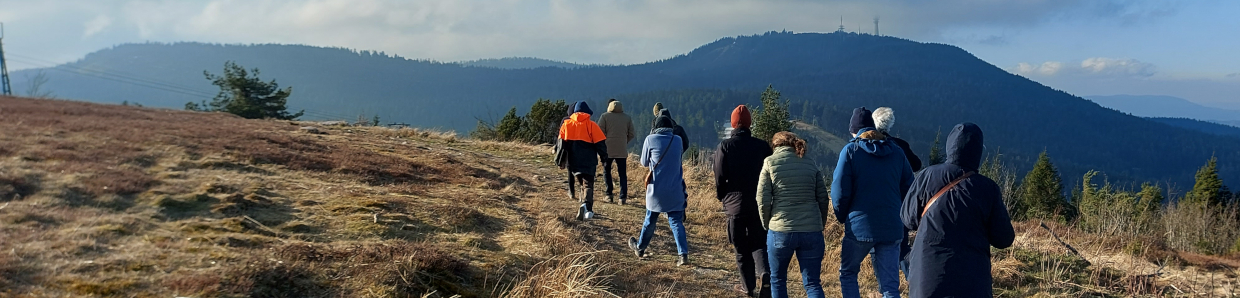
The Soil Science and Geoecology Research Group at the University of Potsdam conducts research on complex environmental systems and the interactions between soil, water, the atmosphere, and the biosphere. Key areas of focus include soil and site ecology, biogeochemistry, and the study of ecosystem services. To this end, the research group combines field and laboratory studies with process-oriented analyses and modeling.
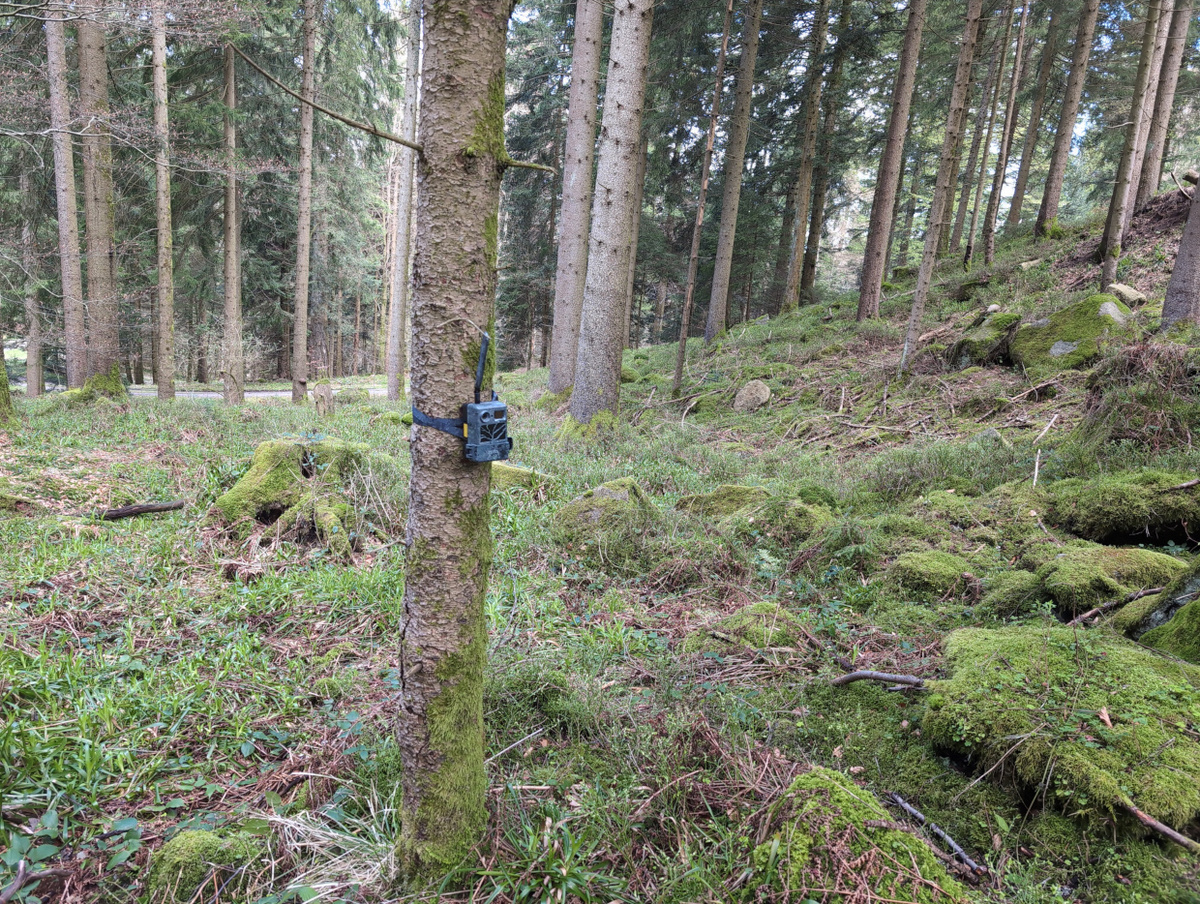
Within BioWaWi-KI, the University of Potsdam serves as the project leader and focuses in particular on soil water balance and its spatial and temporal dynamics. This includes pedological investigations and continuous soil moisture monitoring. In addition, wildlife cameras are used as an imaging technique to record the condition and changes in ecosystems. The data collected form an important basis for analyzing the relationships between water balance, biodiversity, and ecosystem services, as well as for the modeling and AI work within the project.

The Environmental Systems Research Group at the Institute of Applied Geosciences (AGW) of the Karlsruhe Institute of Technology (KIT) investigates material flows and interactions in complex environmental systems based on an understanding of mineralogical and geochemical processes. The research combines, among other disciplines, geoecology, mineralogy, and aquatic geochemistry.
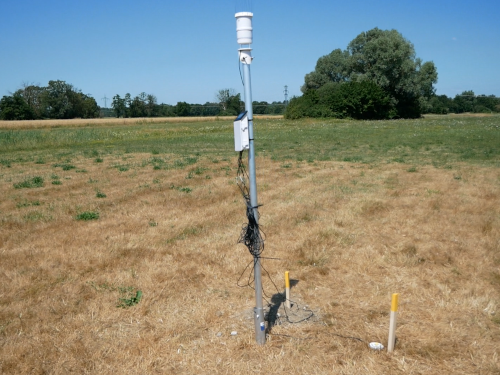
Within BioWaWi-KI, the research group coordinates the project and is primarily responsible for establishing and operating the environmental monitoring network in the study areas. A key focus is on the continuous monitoring of soil moisture, as well as on pedological field and laboratory investigations used to determine important soil properties and water-holding parameters. The measurement and analysis data obtained form a central basis for characterizing the soil water balance spatially and temporally and for making it available for further modeling and AI work within the project.
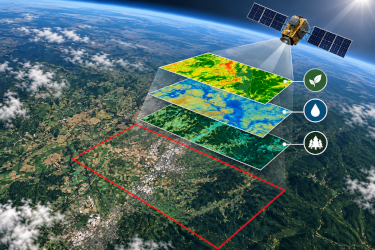
The Institute of Photogrammetry and Remote Sensing (IPF) at KIT focuses, among other things, on remote sensing, geoinformatics, and machine learning, with an emphasis on the automated analysis of remote sensing data and the development of new monitoring methods for environmental and climate issues.
In the BioWaWi-KI project, the IPF is specifically investigating small-scale climatic conditions in forested areas. To this end, temperature and soil moisture are continuously recorded to map spatial variations within forest stands and their changes over time. The measurements help to better understand the influence of the forest microclimate on the water balance and site conditions and provide an important data foundation for further analyses and modeling within the project.
Stadtwerke Bühl GmbH is a regional utility company that supplies households and businesses in the region with drinking water, electricity, natural gas, and heat, among other services.
In BioWaWi-KI, Stadtwerke Bühl contributes its water protection areas as key study sites and its practical experience as a water supplier. A key focus is the establishment of a control center where monitoring data—as well as future model and AI results—will be consolidated. In this way, Stadtwerke Bühl serves as the interface between research and application and helps translate the project results into concrete action plans for the management of water protection areas.
The NABU Forest Institute in Bühl is active in applied ecological research, environmental planning, and nature conservation. Its main areas of focus include, in particular, floristic and faunistic surveys, biotope mapping, and the monitoring of habitats and species.
As part of the BioWaWi-KI project, the NABU Forest Institute conducts extensive surveys of flora and fauna and, on intensive monitoring plots, examines in great detail the relationships between species occurrence, vegetation, and environmental conditions. Among other things, the target is to identify moisture-dependent indicator species and study their response to changes in the water balance. In addition, a drone equipped with a multispectral camera is used to spatially assess drought stress in vegetation. The biodiversity data collected is then linked with hydrological and other environmental data
Okeanos Smart Data Solutions GmbH develops data-driven solutions for the water and environmental sectors. The company combines expertise in water management with environmental monitoring, data analysis, geoinformatics, software development, and artificial intelligence to, among other things, track and predict hydrological processes and extreme events.
Within BioWaWi-KI, Okeanos focuses on integrating and processing various monitoring and environmental data, as well as developing AI-based forecasting methods. The target is to identify patterns and correlations in the data, estimate future developments in the water cycle, and use this information to develop an early warning system for critical environmental conditions. In this way, Okeanos establishes a crucial link between the data collected in the project, the scientific models, and their subsequent use as a basis for decision-making by the water utility.

Joswig Ingenieure GmbH is an engineering firm specializing in water, the environment, geothermal energy, and groundwater modeling. Its range of services includes, in particular, hydrogeological studies, groundwater management, and the development and application of numerical groundwater, water balance, and mass transport models.
As part of the BioWaWi-KI project, Joswig is further developing the hydrogeological groundwater model for the study areas. This model simulates groundwater flow and recharge and examines the effects of changing climatic and hydrological conditions. A particular focus of the project is on integrating groundwater modeling with AI approaches, so that process models, monitoring data, and AI-based analyses can be used together for forecasts and scenarios.

Plan_N begleitet Prozesse der nachhaltigen Regional- und Kommunalentwicklung mit einem besonderen Schwerpunkt auf Dialog, Beteiligung und Wissenstransfer.
In BioWaWi-KI unterstützt Plan_N als Unterauftragnehmer die Stakeholder-Beteiligung und den Dialog zwischen Forschung und Praxis. Dazu gehören insbesondere die Konzeption und Moderation von Beteiligungsformaten sowie die Unterstützung des Wissenstransfers.

pro_re – Participation and Mediation designs and supports participatory processes with a focus on participation, mediation, and citizen science, particularly in the areas of environmental protection and nature conservation.
Within BioWaWi-KI, pro_re focuses in particular on involving schools. Through appropriate participatory and educational formats, students are introduced to the topics of biodiversity, the water cycle, and climate change and are actively engaged in the project.